
In a nutshell ⚡
- The pointed tip of the katana, designed for precise cutting and thrusting
- Begins at the yokote line and forms a distinct geometric section of the blade
- Composed of key elements like the fukura (edge curvature) and boshi (temper line)
- One of the most complex parts to forge and polish correctly
- Exists in several forms (ko, chu, o-kissaki), each suited to different uses and styles
Or read on for detailed information 📚!
What is Kissaki?
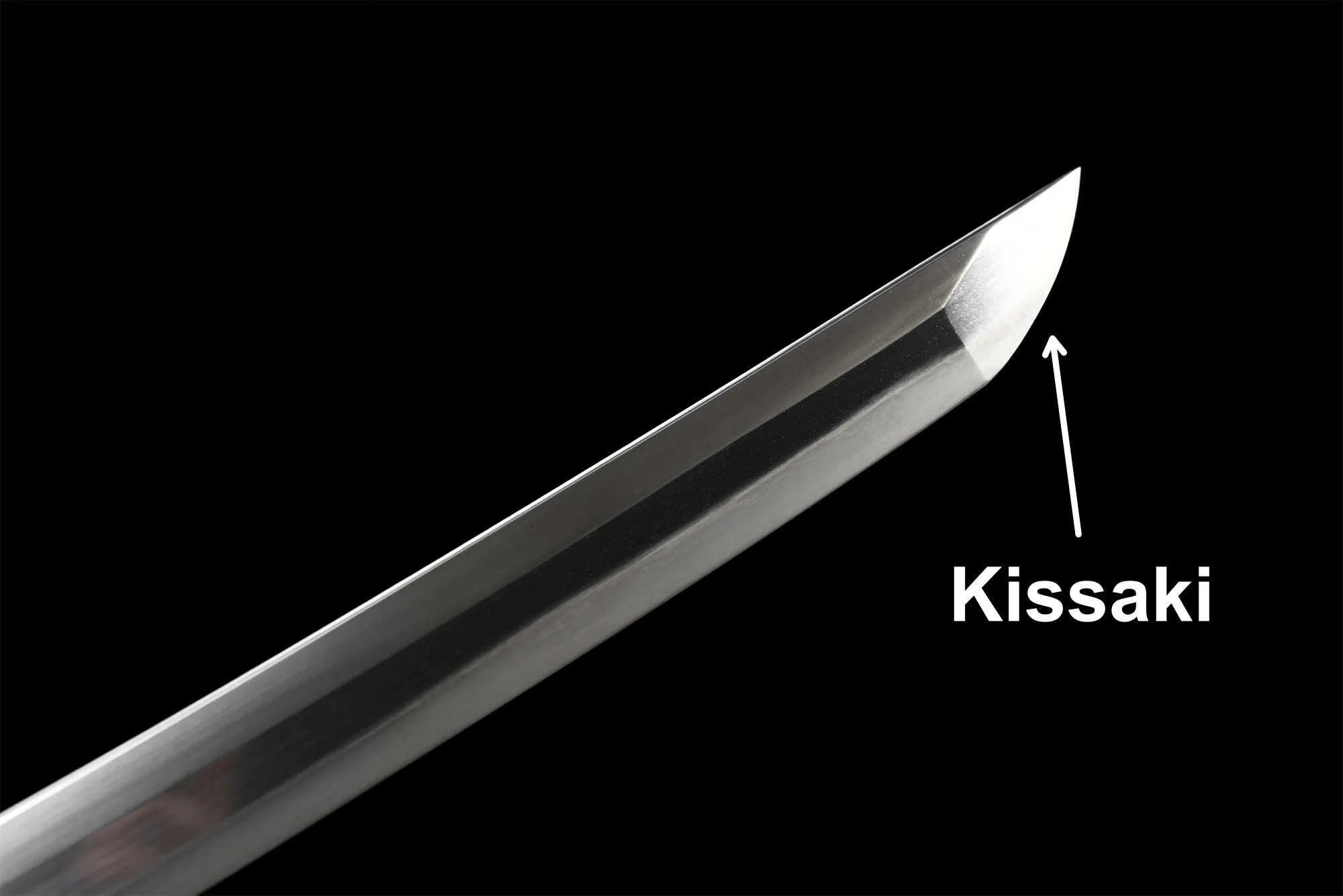
The kissaki (切先) is the tip of the katana blade, the terminal section that begins at the yokote line and ends at the very point of the sword. It is the hardest component of the entire blade to forge and polish correctly, the first place an experienced collector examines when assessing quality, and the component most directly responsible for the sword’s ability to deliver precise thrusting strikes.
The word kissaki is composed of two kanji: kiru (切, to cut) and saki (先, tip or point). It is, literally, the cutting point and every aspect of its geometry is a deliberate design decision that reflects the period, the school, and the intended use of the sword.
The Anatomy of the Kissaki
The kissaki is not simply the sharp end of the blade. It is a geometrically distinct zone with its own components and its own set of polishing requirements.
Yokote 横手
The yokote is the transverse line that separates the kissaki from the main body of the blade. It runs perpendicular to the edge and marks the beginning of the tip zone. On a correctly made blade, the yokote is a crisp, clean line that requires exceptional polishing skill to render well. A blurred or poorly defined yokote is one of the most reliable quick indicators of mediocre craftsmanship. On entry-level swords, the yokote is often absent entirely, with the blade simply tapering to a point without this defining transition.
Fukura ふくら
The fukura is the curvature of the cutting edge within the kissaki zone. A rounded fukura (fukura-tsuku) produces a fuller, more robust tip suited to cutting and general use. A flatter fukura (fukura-kareru) produces a sharper, more angular tip suited to thrusting and piercing. The choice of fukura reflects the intended use of the sword and the aesthetic preferences of the swordsmith’s school.
Ko-shinogi 小鎬
Within the kissaki, the shinogi (blade ridge) continues as the ko-shinogi, a small ridge that runs from the yokote to the tip. It defines the geometry of the kissaki’s upper surface and is one of the polishing reference points that gives the tip its characteristic three-dimensional quality.
Boshi 帽子
The boshi is the hamon (temper line) within the kissaki. Because the kissaki’s geometry differs from the main blade, the hamon turns back on itself at the tip rather than continuing straight. The quality of the boshi is a primary indicator of a swordsmith’s skill: hardening and polishing the kissaki correctly is significantly more difficult than the rest of the blade. For a full breakdown of boshi types, see our complete hamon guide.
Types of Kissaki
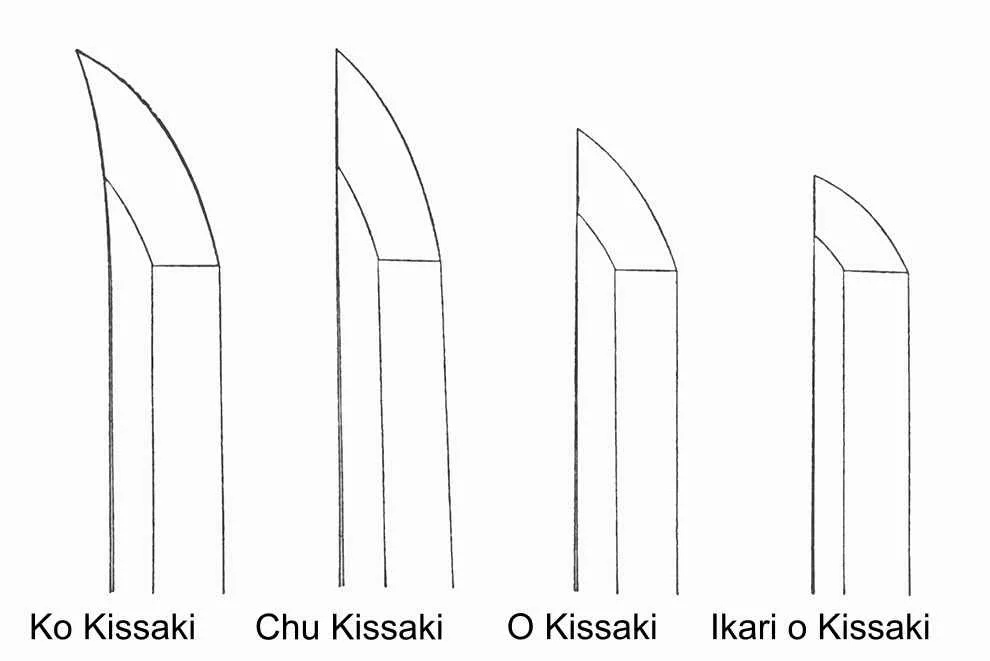
The size and shape of the kissaki varied significantly across different historical periods and swordsmithing schools. Each type has its own name, historical associations, and practical implications.
| Type | Kanji | Characteristics | Historical Period |
|---|---|---|---|
| Ko-kissaki | 小切先 | Small, compact tip. Short yokote, modest fukura. Elegant and restrained in appearance. Favours thrusting precision over cutting surface. | Heian to early Kamakura period. Associated with early tachi. |
| Chu-kissaki | 中切先 | Medium tip. The most common and versatile form, balancing cutting and thrusting ability. The standard on most production katana today. | Mid-Kamakura period onward. Found across all later periods. |
| O-kissaki | 大切先 | Large, elongated tip. Maximises cutting surface and presence. More aggressive appearance. Slightly reduces thrusting precision relative to ko-kissaki. | Nanbokucho period (1333 to 1392), Shinto and Shinshinto periods. |
| Ikubi-kissaki | 猪首切先 | Very short tip, wider than tall, resembling a boar’s neck (ikubi). Extremely robust and resistant to breakage. Associated with the middle Kamakura period. | Mid-Kamakura period. Found on some tachi and tantō. |
| Kamasu-kissaki | 鎌先切先 | Flat fukura with a sharply angular profile. Named after the barracuda fish. Found on chokuto (straight swords) and early blades. Maximum thrusting penetration. | Nara period and early straight-bladed swords. |
| Kissaki-moroha-zukuri | 切先両刃造り | Double-edged kissaki: the tip is sharpened on both edges. Maximum penetrating power. Associated with the legendary Kogarasu-maru and certain tanto. | Rare. Nara period and specific utility blades. |
Why the Kissaki Is the Hardest Part to Make
Every stage of sword production is more difficult at the kissaki than on the main body of the blade. Understanding why clarifies why its quality is so revealing about the overall standard of a sword.
Forging
The kissaki requires the steel to taper precisely to a point while maintaining correct geometry on all surfaces simultaneously. The three-dimensional intersection of the ha (cutting edge of the blade), ko-shinogi (ridge), and mune (spine) at the tip requires the swordsmith to control the flow of metal with exceptional precision. Errors here cannot easily be corrected without removing significant amounts of steel.
Hardening
During clay tempering and quenching, the kissaki is the most thermally unstable zone of the blade. It is thin, cools extremely rapidly, and the margin for error in the clay application is minimal. An incorrectly executed boshi here means either a tip that is under-hardened (and will not hold an edge under use) or over-hardened and therefore brittle (and prone to chipping or breaking on impact). The failure rate at this stage is higher for the kissaki than for any other zone of the blade.
Polishing
The kissaki requires its own polishing techniques, tools, and reference surfaces. The togishi (polisher) must maintain the yokote as a sharp, clean line while simultaneously working the three converging surface planes of the tip to their correct geometries. A mistake here a scratched yokote, an asymmetric fukura, a boshi that has been over-polished into vagueness cannot be undone without removing metal and re-doing significant work. The best togishi are judged significantly on their kissaki work. The kissaki requires specific polishing techniques that differ from the rest of the blade, making proper katana maintenance essential to preserve its geometry.
The Kissaki and Sword Classification
The kissaki’s size and shape is one of the primary tools used by scholars and appraisers to attribute a blade to a specific period, school, or region. Each period’s characteristic kissaki reflects the metallurgical capabilities, aesthetic preferences, and military requirements of its time:
- Heian to early Kamakura: ko-kissaki on tachi, reflecting the mounted cavalry combat of the period where a precise thrusting tip was valued.
- Mid-Kamakura: ikubi-kissaki (short, wide), reflecting the need for a robust tip capable of penetrating the heavier armour of the period.
- Nanbokucho: o-kissaki on long, imposing battlefield swords (nodachi and extended katana), reflecting the period’s preference for dramatic, powerful blades.
- Muromachi: return to chu-kissaki as warfare became more varied and the sword more versatile.
- Edo: refined chu-kissaki and careful o-kissaki on presentation and status swords, reflecting the shift from battlefield weapon to art object.
The kissaki works in direct relation with the blade ridge and curvature, particularly the shinogi geometry.
Frequently Asked Questions
What is the difference between kissaki and boshi ?
The kissaki is the entire tip zone of the blade, from the yokote line to the point. The boshi is specifically the hamon (temper line) within the kissaki zone. The boshi is part of the kissaki but the kissaki is more than just the boshi it includes all the geometric components of the tip (yokote, fukura, ko-shinogi) as well as the temper pattern.
What is the yokote and why does it matter ?
The yokote is the transverse line that defines the beginning of the kissaki, separating it from the main blade body. A clean, sharply defined yokote requires excellent polishing technique and is one of the most reliable quick quality indicators on any katana. A blurred or absent yokote indicates poor polishing or an entry-level blade.
Which kissaki type is best ?
There is no universally best kissaki type the choice depends on intended use and aesthetic preference. For cutting and tameshigiri, a chu-kissaki or o-kissaki with a rounded fukura provides more cutting surface. For thrusting techniques, a ko-kissaki with a flatter fukura provides more precision. For general display and collecting, chu-kissaki is the most versatile and historically representative form.
Why do some katana not have a yokote ?
Entry-level swords often lack a properly defined yokote because forming it correctly requires additional polishing skill and time. The blade simply tapers to a point without the transverse line. This is a cost-reduction measure in production. On these blades the kissaki exists geometrically, but the defining line that marks its beginning has not been rendered correctly.
Can a damaged kissaki be repaired ?
Yes, but at significant cost to the blade’s length and the swordsmith’s time. A chipped or broken kissaki can be re-profiled by a qualified togishi, but this removes steel from the entire tip zone and shortens the nagasa. On antique blades, a repaired kissaki is called o-suriage (if the entire blade was shortened) or saki-suriage (if only the tip area was re-profiled), and both reduce the blade’s value relative to an intact kissaki.
To fully understand how the tip integrates with the rest of the blade, explore the complete structure of a katana.
For detail on the hamon within the kissaki (boshi), see our hamon guide.
Browse our katana collection.