Showing all 4 resultsSorted by popularity
-
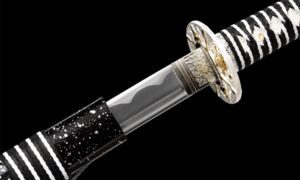
 £235.00Select options This product has multiple variants. The options may be chosen on the product page
 -
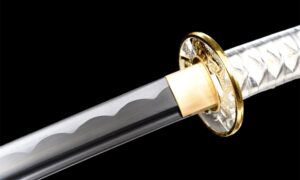
£240.00Select options This product has multiple variants. The options may be chosen on the product page
-
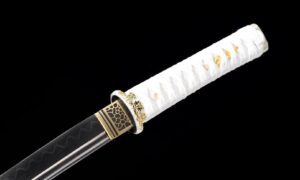
£198.00Select options This product has multiple variants. The options may be chosen on the product page
-
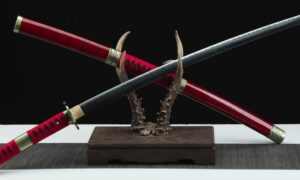
£220.00Select options This product has multiple variants. The options may be chosen on the product page
Showing all 4 resultsSorted by popularity
Tanto Swords for Sale – Authentic Japanese Short Blades in Carbon Steel
The tanto (短刀) is the shortest blade in the traditional samurai armament, and one of the most underestimated. Compact, precise, and devastatingly effective in close quarters, the tanto sword was carried by samurai as the essential companion to the katana, drawn when the long blade could not reach. Sometimes called a tanto knife, a tanto dagger, or a Japanese dagger in the West due to its compact size, it is in every sense a true Japanese sword, built with the same steel, the same tempering process, and the same craftsmanship as a full-length blade. Today it is prized by collectors for its refined geometry, by martial artists for its technical demands, and by enthusiasts who simply appreciate the most concentrated expression of Japanese sword craft.
At Japanese Swords, every tanto for sale in our collection is crafted in genuine carbon steel, hand-finished, and built to the same standard as our full-length katanas. No zinc alloy, no decorative steel. Real blades, built to last.
What Is a Tanto?
The word tanto translates literally as “short sword” (短 = short, 刀 = sword). With a blade typically between 15 and 30 cm, the tanto sits below the wakizashi in length and was classified separately from longer Japanese swords under the swords and firearms law of feudal Japan.
Originally carried as a backup weapon for mounted samurai during the Kamakura and Muromachi periods, the tanto evolved considerably over the centuries. Its thick, rigid blade was designed not for sweeping cuts but for penetrating gaps in armour and delivering decisive strikes in confined spaces where a katana would be impossible to draw or manoeuvre.
Beyond the battlefield, the tanto held deep ceremonial significance. It was traditionally given to a bride as a protective gift on her wedding day, symbolising honour and self-defence. It was also the blade used in seppuku, the ritual suicide of the samurai, making it as much a symbol of honour and finality as of combat readiness.
Tanto Blade Shapes and Styles
Unlike the katana, which follows a relatively consistent geometry, the tanto comes in several distinct blade profiles, each with its own cutting and thrusting characteristics:
- Hira-zukuri: the most traditional profile, flat ground with no central ridge. Clean, elegant, and uncompromisingly sharp.
- Shobu-zukuri: a subtle iris-leaf shape with a gentle curve toward the tip, balancing thrusting and slashing performance.
- Kissaki-moroha-zukuri: double-edged near the tip, maximising piercing capability. Associated with the legendary tanto of the swordsmith Kogarasu Maru.
- Kanmuri-otoshi-zukuri: a clipped, asymmetric tip that adds rigidity and penetrating power, designed specifically to pierce armour.
- Osoraku-zukuri: a dramatic profile with an exceptionally long kissaki (tip) that takes up nearly half the blade length, combining the aesthetics of a wakizashi with the compactness of a tanto.
- Yoroi-toshi: heavier and thicker than a standard tanto, designed exclusively for penetrating armour. The most aggressive tanto profile.
- Kaiken: a smaller-than-average tanto, traditionally carried by women of the samurai class under the kimono for self-defence. The most discreet of all tanto forms.
- Aiguchi: a tanto with no tsuba (guard), giving it an exceptionally clean and minimalist silhouette. The absence of a guard makes it easier to conceal and draw quickly.
- Hamidashi: similar to the aiguchi but with a very small tsuba, offering minimal hand protection while maintaining the clean, understated aesthetic of the guardless tanto.
The art of handling the tanto is called tanto-jutsu, and its techniques appear across several Japanese martial arts including aikido, jujutsu, and ninjutsu, from close-quarters defence to throwing techniques inspired by the shuriken.
Browse the collection above to find your preferred profile, or contact us if you have a specific geometry in mind.
Who Is a Tanto For?
The tanto appeals to a wide range of buyers for different reasons:
- Collectors: the tanto’s compact size makes it an ideal display piece, requiring less wall space than a katana while delivering the same level of craftsmanship. A tanto and katana displayed together as a partial daisho set make an exceptional centrepiece. It also makes a remarkable gift for anyone fascinated by Japanese culture, history, or martial arts.
- Martial artists: tanto techniques are a core component of several Japanese martial arts, including aikido, jujutsu, and ninjutsu. An unsharpened tanto is ideal for kata practice and partner drills.
- Enthusiasts and gift buyers: the tanto is often the first Japanese blade purchase for enthusiasts who want something more manageable than a full-length katana, and makes an exceptional gift for anyone fascinated by Japanese culture and history.
Have a look at our guide to choosing a Japanese sword that matches your needs.
Tanto or Wakizashi?
The tanto and the wakizashi are often confused, but they are distinct in purpose and geometry. The tanto is shorter (under 30 cm), thicker, and optimised for thrusting and piercing. The wakizashi is longer (30 to 60 cm), curved like a short katana, and designed for cutting. Together with the katana, the wakizashi forms the traditional daisho pair worn by samurai. The tanto was an additional blade, not a replacement.
-Serpent-de-Cuivre-04-3-300x180.jpg)