
Choosing a Japanese sword is not like buying any other object. A katana is a precision instrument: its steel, geometry, construction, and fittings all interact to produce a blade that either performs, or does not. Buy the wrong one and you will be disappointed at best, unsafe at worst. Buy the right one and you will own something that will last decades, perform exactly as expected, and reward closer inspection the longer you own it.
This guide covers everything: who buys Japanese swords and why, how to define your needs, what to look for in a blade, what the numbers and terms on product pages actually mean, how to read quality at a glance, what to expect at different price points, and what to avoid. By the end you will know exactly what to buy, and why.
Jump to: Katana, Tanto or Wakizashi? | First Time Buyer | Define Your Use | The Blade | Steel | Fittings and Construction | Price Guide | Anime and Film Replicas | What to Avoid | UK Law
Katana, Tanto, or Wakizashi?
Japanese swords come in three main lengths, each with its own character and use cases.
Katana 刀
Blade length 60 to 73 cm. The primary sword of the samurai and the most versatile Japanese blade for display, practice, and cutting. If you are buying your first Japanese sword and are unsure which to choose, start with a katana.
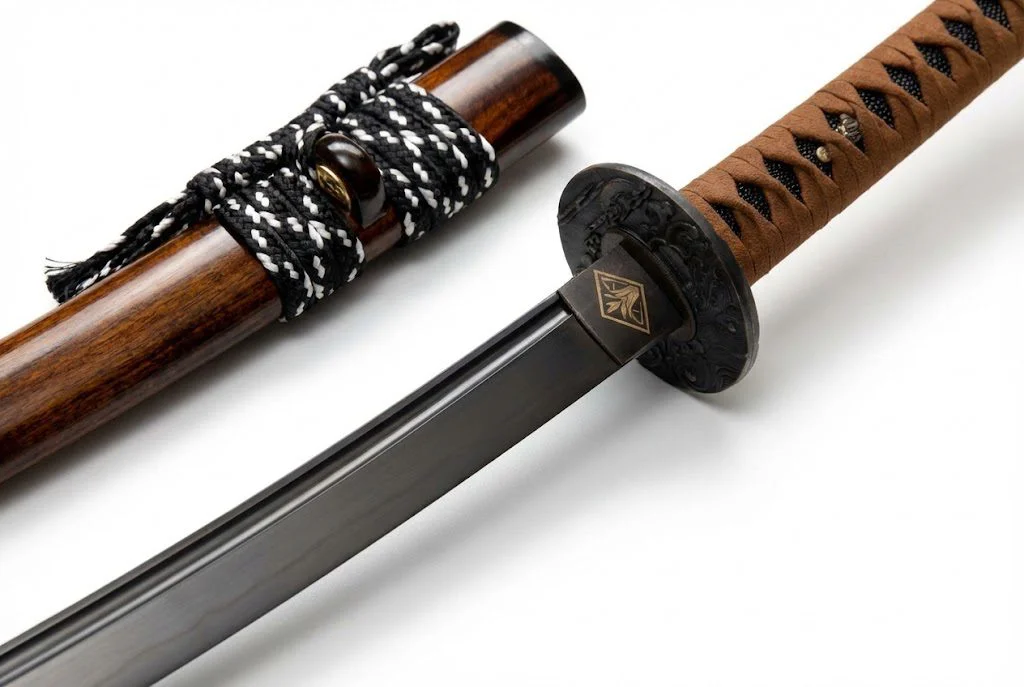
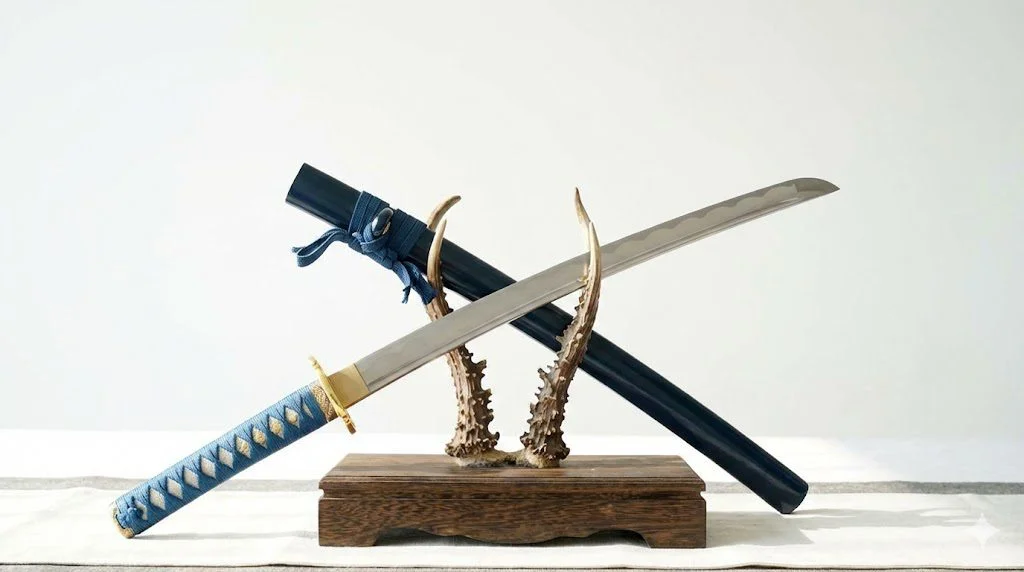
Wakizashi 脇差
Blade length 30 to 60 cm. The companion sword of the samurai, worn alongside the katana as the daisho pair. Shorter and faster than a katana, ideal for indoor use and close-quarters techniques. An excellent first sword for those who find a full katana’s length intimidating, and a natural complement for collectors who already own a katana.
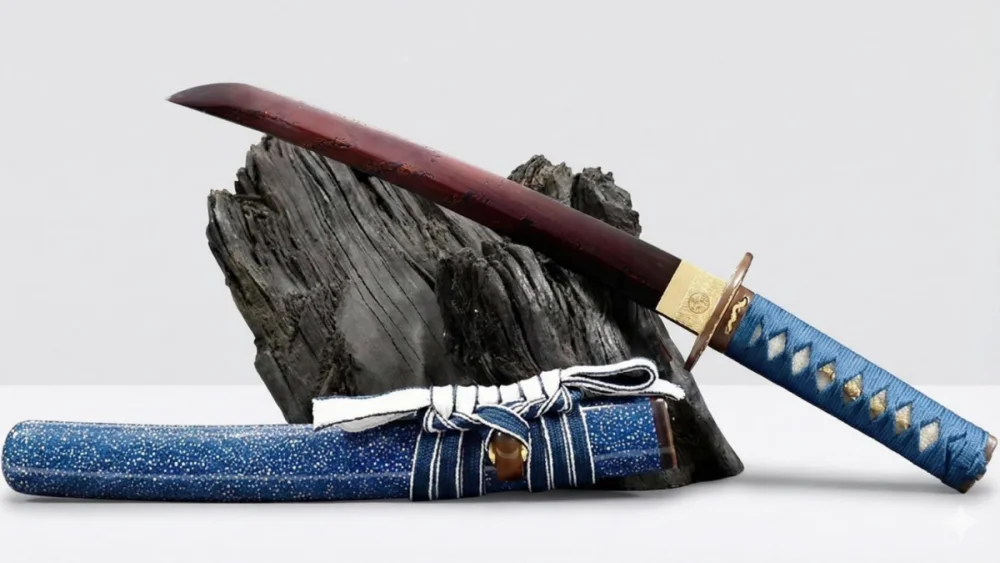
Tanto 短刀
Blade under 30 cm. The shortest blade in the samurai armament, compact, precise, and sometimes called a tanto knife in the West. Built to the same standard as a full katana despite its size. An ideal display piece, a collector’s item with deep historical significance, and a training tool for tanto-jutsu practitioners.
First Time Buyer, Start Here
If this is your first Japanese sword, three questions will determine everything else:
- What will you do with it? Display it, practise martial arts, cut with it, or collect it?
- What is your budget? Honest answer, including the cost of a stand, a maintenance kit, and potentially a bag.
- Do you want it sharp or unsharpened? This affects both safety and legality in certain countries.
These three answers will narrow your choice from hundreds of swords to a handful. Everything else in this guide is detail on top of those foundations.
Step One, Define Your Use
The single most important decision you will make is defining what you intend to do with your sword. Every other choice, steel, length, fittings, edge, follows from this.
Display and Decoration
You want a beautiful object for your wall, shelf, or display case. Functionality is secondary. In this case, focus on the visual quality of the fittings, the tsuba design, the lacquer finish of the saya, the ito colour and wrap pattern, and on the blade’s overall proportions. A well-made display katana should still be constructed from carbon steel with a beautiful hamon: a decorative blade that looks good but would shatter if touched is a missed opportunity. Our katana collection includes blades across all price points suited to display.
Iaido and Kenjutsu Practice
You practise a Japanese sword art and need a blade for forms, kata, and draw technique. The priorities here are: correct weight and balance for your school’s requirements, a handle long enough for two-handed technique, and either a genuine unsharpened blade (for beginners and intermediate practitioners) or a shinken (for advanced practitioners whose school permits live blades). For iaido specifically, the blade’s sori (curvature) and nagasa (length) must be matched to your height and draw arc. If you are unsure, consult your sensei before buying.
Tameshigiri (Cutting Practice)
You want to cut, rolled tatami mats, bamboo, or similar targets. This is the most demanding use case and requires a functional shinken: a full-tang blade in T10 or 1095 steel, differentially hardened with clay tempering, and correctly balanced for draw cuts. Do not attempt tameshigiri with a blade not designed for it, under the stress of a cut, a poorly constructed blade can fail catastrophically. See our best steel guide for a full breakdown of which steels perform best for cutting.
Collecting
You want a piece of exceptional craft, something that rewards close inspection, appreciates in value, and tells a story. For collectors, the quality of the hamon, hada, fittings, and overall finish are the primary criteria. A collector’s katana should have a genuine differential hardening, a real clay tempered hamon (not etched or painted), quality samegawa and ito, and fittings that are well-matched and well-finished. At the upper end of our range, we offer blades approaching the quality of traditional Japanese production.
Cosplay and Events
You want a sword that looks screen-accurate for events, conventions, or photography. An unsharpened replica is the right choice, same visual quality, safe to carry in appropriate contexts. Browse our anime swords and swords from movies and games for screen-accurate replicas in carbon steel.
Step Two, Understanding the Blade
A katana blade is not a simple piece of sharpened steel. It is a carefully engineered object where every dimension and feature serves a purpose. Knowing what to look for transforms a product description from marketing text into useful information.
Full Tang vs Partial Tang
This is non-negotiable. A full-tang katana has a blade that extends as a single piece of metal through the entire length of the handle (tsuka), secured by one or two bamboo pegs (mekugi). Every functional katana must be full tang. A partial tang or rat-tail tang, where the blade terminates partway through the handle, is a structural failure waiting to happen: under the stress of a cut, the handle can separate from the blade. Never buy a katana without confirming full-tang construction.
Differential Hardening and the Hamon
The hamon is the visible temper line along the cutting edge, the boundary between the hardened edge and the softer, more flexible spine.
Traditionally, it forms during the clay tempering (tsuchioki) process: the blade is coated in clay, leaving the edge exposed. When quenched, the edge hardens rapidly while the spine cools more slowly, creating a blade that is both sharp and resilient.
On higher-end blades, a genuine hamon is the natural result of this differential hardening process. It reveals subtle variations, depth, and activity under light, a sign of traditional heat treatment and careful craftsmanship. However, not all hamon are created through this process.
On more accessible models, the hamon of a japanese sword may be enhanced or simulated for aesthetic purposes. These blades can still be functional and sharp (especially in steels such as T10), but the temper line itself is primarily decorative rather than the result of clay tempering.
A genuine hamon typically shows depth and variation under raking light, while a decorative hamon appears more uniform and surface-level. If a product description says “hamon” without specifying clay tempering or differential hardening, assume the hamon is not genuine.
Blade Geometry: Nagasa and Sori
Nagasa (blade length) should be matched to your height and intended use. A general rule for iaido: your nagasa in cm should be approximately your height in cm divided by 2.5, plus or minus a few centimetres according to your school’s standards. For display or tameshigiri, standard nagasa (68 to 73 cm) suits most purposes.
Sori (curvature) affects draw speed and cutting mechanics. A deeper sori (more curved) improves draw-cut performance; a shallower sori gives more control and is preferred by some iaido schools. Most production katana use a moderate torii-zori that balances both. If you practise a specific martial art, your sensei’s guidance takes precedence over general rules.
The Kissaki
The tip (kissaki) is the hardest part of the blade to forge and polish correctly, and it is the first place an experienced buyer looks when assessing quality. A clean, well-defined kissaki with a sharp yokote (the transverse line separating the tip from the body) indicates quality polishing and careful manufacture. A blurred yokote, an asymmetric tip, or a kissaki that does not align with the blade’s geometry are signs of poor craftsmanship.
Step Three, Choosing Your Steel
The steel is the most important variable in a katana’s performance. Carbon content, alloying elements, and heat treatment determine how the blade cuts, how long it holds its edge, and how it ages. For a full technical breakdown, see our complete steel guide. Here is the summary relevant to buying decisions:
1045 Carbon Steel
Entry level. Affordable, flexible, and durable. Takes a reasonable edge and holds it under light use. Suitable for display, beginner handling, and light practice. Not recommended for tameshigiri or serious martial arts, the lower carbon content limits hardness and edge retention under stress.
1060 Carbon Steel
The workhorse. Excellent balance of toughness and hardness. Holds a good edge through regular use, resists impact without chipping, and clay-tempers well to produce a genuine hamon. The right choice for regular training, light tameshigiri, and collectors who want a functional blade without moving to the premium tier.
T10 Tool Steel
Our recommendation for serious use. Tungsten alloying gives T10 superior hardness, wear resistance, and scratch resistance compared to 1095 at similar carbon content. Holds its edge longer under heavy cutting use, produces an exceptional hamon when clay-tempered, and ages beautifully. The right choice for tameshigiri, dedicated martial arts practice, and collectors who want maximum performance.
Damascus Steel
Pattern-welded steel, chosen primarily for its visual identity, the flowing grain patterns forged into the blade through repeated folding are unique to every blade. A well-made Damascus katana in high-carbon steel is a genuine cutter, but Damascus is not inherently superior to single-steel blades of comparable quality. Choose it for aesthetics and uniqueness; choose T10 or 1060 for pure performance. See our Damascus blade selection.
Manganese Steel
A carbon-manganese alloy offering good hardness and wear resistance at a competitive price. Suitable for display and regular cutting. The manganese content improves edge durability but requires quality control in manufacture, at the right level it performs well; at too high a level it becomes brittle.
Step Four, Fittings and Construction Quality
A blade is only as good as its fittings. A katana with a beautiful blade and poor handle construction is an unsafe sword. Here is what to look for:
Samegawa and Ito
The handle is traditionally wrapped in ray skin (samegawa) beneath the ito cord. Genuine samegawa features distinct rounded nodules and a natural white or cream tone. It enhances grip and durability, particularly on higher-end, traditionally constructed blades.
On more accessible models, the samegawa may be panelled or simulated for aesthetic consistency. While visually similar, these materials provide a different tactile feel but still offer a stable base for the handle wrapping when properly assembled.
The ito wrapping itself is critical: it should be tight, even, and symmetrical, with clean, well-defined diamonds and no looseness. Regardless of the underlying material, a well-executed wrap is essential for both comfort and control.
Tsuba Quality
The guard should fit firmly between the habaki and fuchi with no lateral play. Iron or solid metal tsuba are significantly better than cast zinc alloy, the difference in weight and feel is immediately apparent. The tsuba also affects the sword’s balance: a heavier tsuba moves the point of balance rearward, making the sword feel lighter in the cut.
Habaki Fit
The habaki (blade collar) should lock into the koiguchi (saya mouth) with a firm, clean click, not too loose, not too tight. Rattle in the scabbard means a worn habaki; sticking on the draw means a habaki that has not been fitted correctly. Both are problems that indicate poor quality control.
Saya Quality
The scabbard should be made from properly lacquered wood with no visible cracks, bubbles, or uneven finish. The lacquer protects the wood and the blade from moisture. A poorly lacquered saya will deteriorate quickly and may allow moisture to reach the blade.
Mekugi
The bamboo peg (mekugi) that locks the blade into the handle must be firmly seated with no play. On a quality sword, pressing your thumb against the mekugi should produce no movement. Any looseness is a safety issue that must be addressed before the sword is used.
Step Five, What to Expect at Different Price Points
Price in Japanese swords is not arbitrary, it reflects the cost of materials, heat treatment, polishing, and fitting quality. Here is what each tier actually buys you:
Around £150 — Entry Level
1045 or 1060 carbon steel, monotempered (no genuine hamon), basic fittings in iron or alloy, functional construction with full tang. Suitable for display, light handling, cosplay, and getting a sense of sword weight and geometry. Not suitable for tameshigiri or serious martial arts practice.
£150 to £300 — Functional Mid-Range
1060 or T10 steel, sometimes clay-tempered with a genuine hamon, good samegawa and ito quality, solid iron or copper fittings, properly lacquered saya. This is the tier where a sword becomes genuinely functional, suitable for regular iaido practice, light tameshigiri, and collecting. The majority of our catalogue sits here.
£300 to £600 — Premium Functional
T10 or high-grade 1095 clay-tempered steel with a well-defined hamon and visible hada, high-quality silk ito over genuine samegawa, iron or shakudo fittings with detailed craftsmanship, precisely fitted habaki and saya. Suitable for serious tameshigiri, advanced martial arts practice, and collectors who want a blade that bears close inspection.
£600 and Above — Collector Grade
At this level, you are approaching the quality of traditional Japanese production: the finest materials throughout, master-level hamon and hand-polished blades, refined and richly finished fittings such as gold or silver plating, and advanced constructions such as San-mai, Kobuse, or even Tamahagane. These are as much investment pieces as they are functional swords.
Anime, Film, and Game Replicas
If you are drawn to Japanese swords through anime, films, or games, One Piece, Demon Slayer, Ghost of Tsushima, Kill Bill, replica swords are a valid and exciting category. Our replicas are built to the same carbon steel, full-tang standard as our traditional katanas: the only difference is the design.
Choosing between a traditional katana and a replica ultimately comes down to what you want to own. A traditional katana connects you to the history and craft of the samurai. A replica connects you to a story and a character that matters to you. Neither is more legitimate than the other, both deserve to be made well.
Explore our full range of anime swords, and movies and games replica.
What to Avoid When Buying a Katana
The market for Japanese swords contains a significant amount of misleading marketing. Here are the most common warning signs:
- Stainless steel : never suitable for functional use. If the steel type is not specified or listed as “stainless”, avoid for any cutting or practice purpose.
- Rat-tail or partial tang : the blade terminates partway through the handle. Structurally unsafe for use. Always confirm full-tang construction.
- Etched or painted hamon: a flat, uniform temper line is not a real hamon. Look for clay tempering and differential hardening in the product description.
- “Functional blade” at under £80 : the materials and labour for a genuine functional blade cost more than this. This label at low prices is marketing fiction.
- No steel type listed : a reputable seller always specifies the steel. If it is not listed, assume the worst.
- Welded tsuba or fittings : fittings should be fitted and pegged, not welded. Welded components indicate manufacturing shortcuts that compromise the whole assembly.
- Unrealistic “hand-forged” claims : most production katana involve some machine work. Honest sellers describe the process accurately. “Hand-finished” and “hand-polished” are verifiable; blanket “hand-forged” claims on very cheap swords rarely are.
Buying a Katana in the UK
In the UK, curved blades over 50 cm are legal to import and purchase where they are made by traditional methods of making swords by hand, or for use in martial arts. All swords sold by Japanese Swords are produced using the Marugitae (丸鍛え) forging method, hand-polished and hand-assembled, and sold strictly to collectors and martial arts practitioners. Every of our swords comes with a certificate of authenticity and a certificate of conformity and compliant with UK sword law. Laws vary by country, we recommend checking your local regulations before ordering.
Ready to Choose?
If you know your use case and budget, browse our collections directly:
- Our Katana : full range from entry level to collector grade
- Wakizashi : the samurai’s companion blade
- Tanto : the short blade, full craftsmanship
- Anime and Manga Swords : screen-accurate carbon steel replicas
- Movies and Games Swords : Ghost of Tsushima, Kill Bill, Sekiro and more
Still unsure? Read our supporting guide: Best Steel for a Katana. Or contact us directly We are happy to recommend the right blade for your needs.
Frequently Asked Questions
What is the best katana for a beginner ?
For a first katana, a 1060 carbon steel blade with clay tempering and a genuine hamon in the £150 to £250 range is the right starting point. It is functional, durable, honest about its construction, and will not need replacing quickly. Avoid the temptation to go cheaper, the difference in quality at this price point is significant and immediately apparent.
What is the difference between a sharp and an unsharpened katana ?
A sharp katana (shinken) has a fully honed cutting edge, suitable for tameshigiri and martial arts practice. An unsharpened katana has the same construction, balance, and appearance but a blunt edge, suitable for display, iaido forms, cosplay, and safe handling. If you are unsure, start unsharpened. You can always have a blade sharpened later; you cannot un-sharpen an accident.
How long should my katana be ?
For iaido and kenjutsu, nagasa (blade length) should be approximately your height in cm divided by 2.5, though your school’s standards take precedence. For display or tameshigiri, standard nagasa of 68 to 73 cm suits most adults. Children and shorter practitioners should consider a wakizashi-length blade for comfort and safety.
What is the difference between a katana and a wakizashi?
The katana (blade 60 to 73 cm) is the primary sword; the wakizashi (blade 30 to 60 cm) is the companion blade, worn together as the daisho pair. The wakizashi is faster, more manoeuvrable in confined spaces, and historically the blade samurai kept on them at all times. Both are built to the same construction standard.
Is it legal to buy a katana in the UK?
Yes, provided the sword is produced using traditional methods of making swords by hand, or is purchased for martial arts use. All swords sold by Japanese Swords comply fully with UK law. Laws vary by country, always check local regulations before ordering.
How do I maintain a katana?
Wipe the blade after every handling session with a clean lint-free cloth and apply a thin layer of choji oil. Inspect and re-oil every 3 to 4 months for display pieces. Never touch the blade with bare hands, skin acids begin corroding carbon steel within minutes of contact. See our full katana maintenance guide for step-by-step instructions.