
In a nutshell ⚡
- Protects the hand against opposing blows and blade slippage.
- Balances the sword and optimizes handling and grip.
- Evolved from a purely functional component to a symbol of status, artistry, and cultural identity.
- Decorated with symbolic motifs and crafted from noble materials including gold, silver, and refined alloys.
What Is a Tsuba? The Japanese Sword Guard
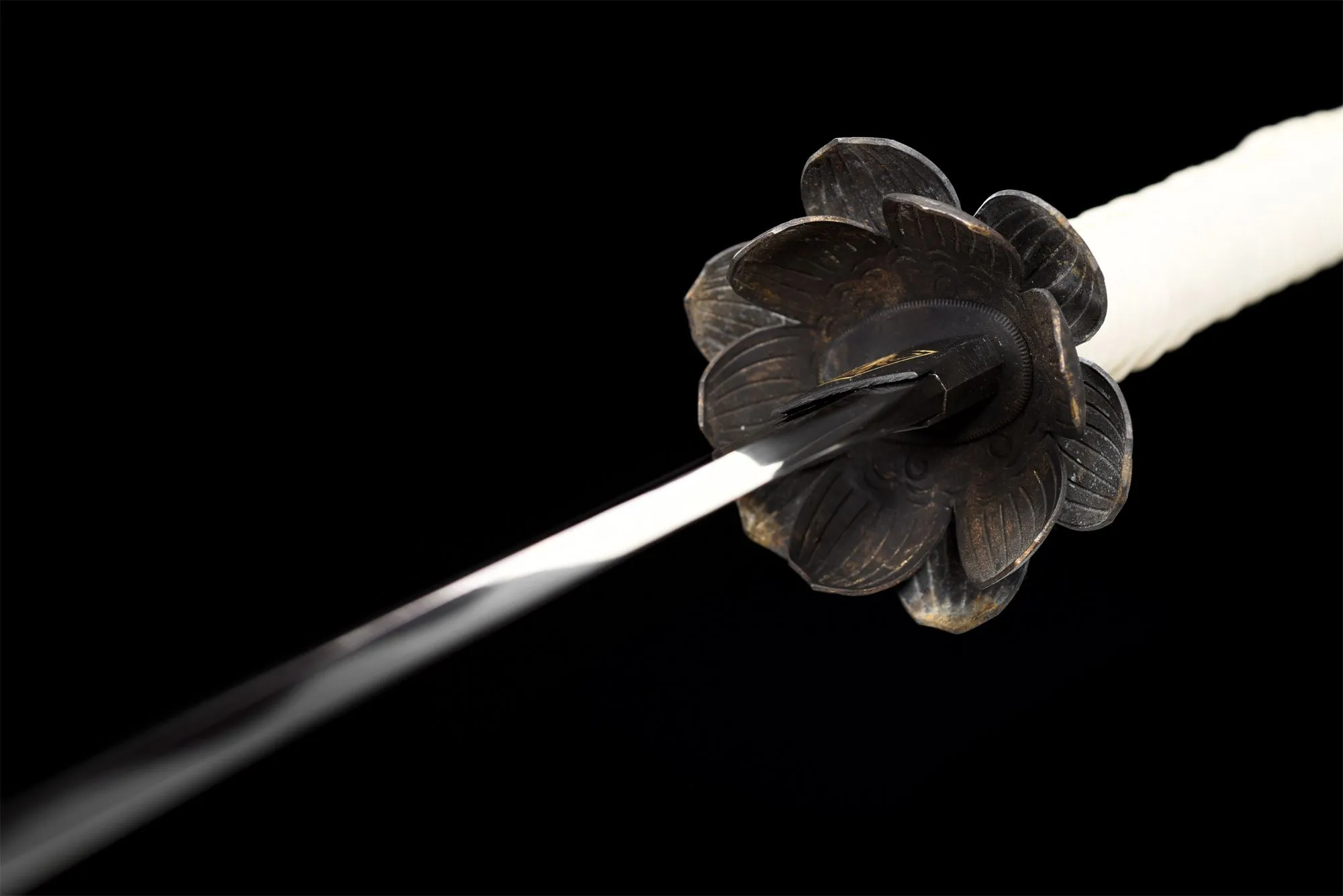
The Tsuba (鍔) is the hand guard of Japanese swords, including the katana, wakizashi, and tanto. Positioned above the Tsuka (handle), it serves as the critical interface between the blade and the warrior’s hand. Beyond its protective role, the Tsuba is one of the most studied and collected components of Japanese swordsmithing, valued both for its craftsmanship and its historical significance. The Tsuba is a central component of the koshirae, the complete mounting of a Japanese sword, linking the blade, tsuka, and decorative fittings for both protection and aesthetic expression.
Tsubas typically measure between 5 and 10 centimeters in diameter and exist in a remarkable variety of shapes, materials, and decorative styles. From minimalist iron discs forged for battlefield use to intricately inlaid pieces commissioned by nobles during peacetime, the Tsuba encapsulates centuries of Japanese artistic and martial tradition.
The Function and Purpose of the Tsuba
Hand Protection
The primary function of the Tsuba is to shield the warrior’s hand during combat. It prevents an enemy’s blade from sliding down toward the grip and protects the wielder’s own hand from slipping forward onto the cutting edge of the blade, a potentially fatal accident in close-quarters fighting.
Balance and Ergonomics
Beyond protection, the Tsuba plays a critical role in adjusting the sword’s center of gravity. This subtle calibration directly affects performance in kata, the codified movement sequences central to the art of swordsmanship, as well as in actual combat. The right Tsuba improves grip ergonomics and allows for more precise, controlled movement.
Tactical Use: Tsubazeriai
In advanced swordsmanship, the Tsuba also enabled a tactical maneuver known as Tsubazeriai, in which two combatants lock their swords together at the guard level, creating a close-range struggle for positional advantage. This technique demonstrates that the Tsuba was not merely a passive protective element but an active component of fighting strategy.
Artistic and Social Function
Although originally utilitarian, the Tsuba rapidly acquired an artistic and social dimension. By the Edo period, it had become a marker of rank and identity, allowing samurai and daimyos to personalize their weapons and signal their status through the quality and intricacy of their sword fittings.
Materials Used in Tsuba Making
Tsubas were crafted from a wide spectrum of metals, ranging from basic iron and bronze to refined alloys and precious metals. The choice of material often reflected both the intended use of the sword and the social standing of its owner.
There are two main categories of Tsuba materials:
Iron Tsubas (Tetsu)
Forged iron Tsubas were the standard for battlefield use. Durable and practical, they were designed to withstand the rigors of combat without elaborate ornamentation.
Soft Metal Tsubas (Kinko)
Kinko Tsubas use a variety of alloys, each with distinctive visual and physical properties:
| Alloy | Composition | Visual Appearance |
|---|---|---|
| Shakudo | Copper-gold alloy | Deep midnight blue |
| Sentoku | Copper, zinc, and lead | Warm brown |
| Shibuichi | Copper-silver alloy | Subtle gray |
In times of peace, particularly during the Edo and Meiji periods, craftsmen incorporated gold and silver inlays, elevating the Tsuba from a martial tool to a prestigious decorative object.
Anatomy of the Tsuba
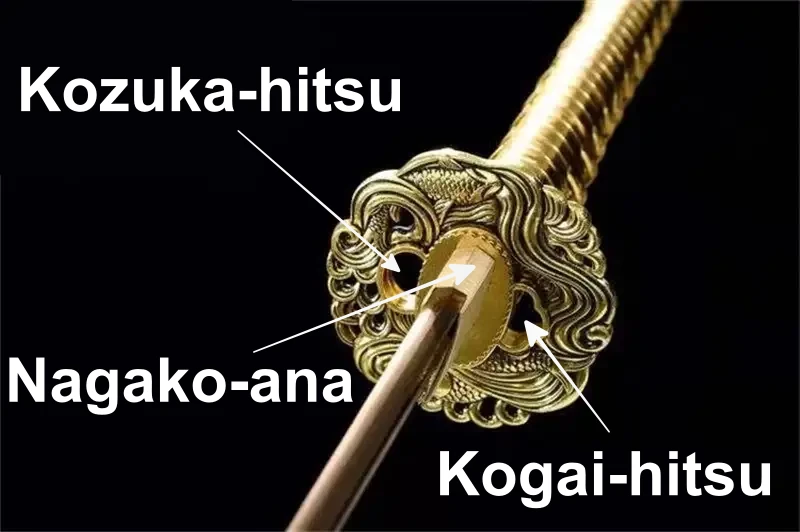
The Tsuba is composed of several distinct structural elements, each serving a specific function:
- Nakago-ana: The triangular central opening through which the sword’s tang (nakago) passes.
- Kozuka-hitsu: A small auxiliary hole designed to hold a kogatana, a miniature utility knife used by samurai for everyday practical tasks.
- Kogai-hitsu: An opening for storing a kogai, a multi-purpose spike used as chopsticks, a hoof scraper, or a hairpin.
History and Origins of the Tsuba
5th–6th Century: Functional Origins
The earliest Tsubas appeared around the 5th and 6th centuries and were simple, teardrop-shaped components forged primarily from iron or copper. Their sole purpose was functional: to protect the hand and stabilize the blade during the constant clan warfare of early Japan. Some were marked with a Mon (family emblem), but decoration was minimal.
Muromachi Period (1336–1573): Refinement Begins
During the Muromachi period, craftsmen began to refine the design and craftsmanship of Tsubas. This era saw the emergence of more sophisticated forging techniques, including early forms of mokume-gane, a layered metal forging method that would be fully developed in the 17th century by tosho (swordsmiths).
Edo Period (1603–1868): The Golden Age of the Tsuba
The relative peace of the Edo period fundamentally transformed the Tsuba. No longer exclusively a battlefield instrument, it became a canvas for artistic expression. Craftsmen known as tsubako developed increasingly sophisticated techniques, incorporating precious metal inlays, patination, and intricate relief work. Tsubas from this period were often passed down through generations as family heirlooms.
Meiji Era (1868–1912): Transition and Export
The abolition of the samurai class and the prohibition of public sword-carrying during the Meiji era brought the martial function of the Tsuba to an end. Swordsmiths pivoted toward producing decorative pieces for export, attracting significant interest from Western collectors. Meiji-era Tsubas are among the most ornate ever produced, combining traditional Japanese aesthetics with the demands of an international luxury market.
Modern Era
Today, Tsubas are crafted from both traditional materials and modern steel. They remain highly sought after by collectors and martial arts practitioners alike, and antique pieces are considered significant cultural artifacts.
Tsuba Shapes
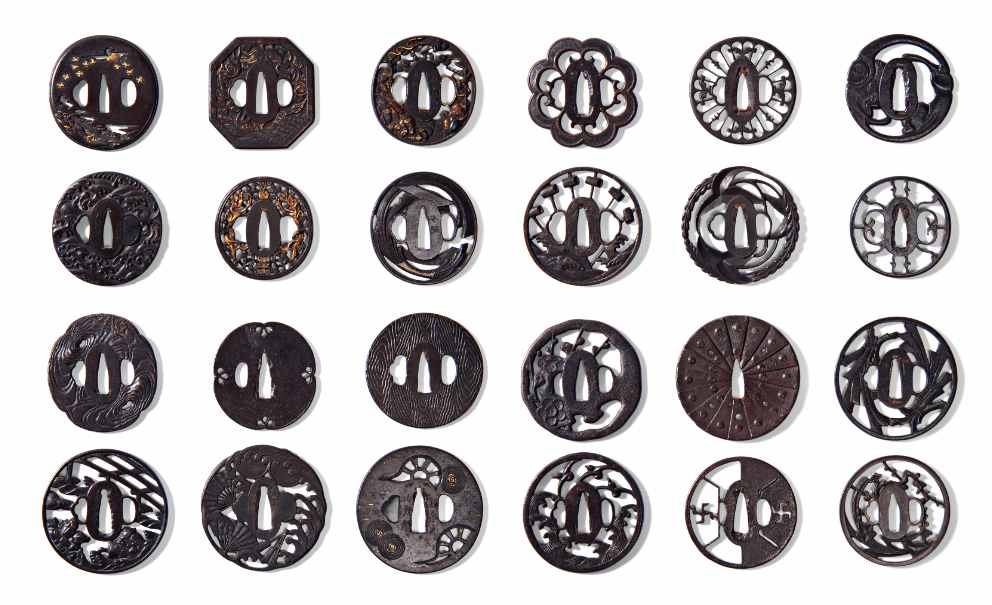
The variety of Tsuba forms reflects the diversity of Japanese aesthetic traditions and regional styles. Among the most documented shapes:
| Shape Name | Description |
|---|---|
| Maru-gata | Classic round form |
| Aori-gata | Rectangular |
| Kiku-gata | Chrysanthemum-shaped; imperial symbol |
| Kaku-mimi | Square |
| Tate-maru-gata | Oval or teardrop-shaped |
| Mokko-gata / Tate Ito-gata | Four-lobed border |
| Hashi-gaku | Hexagonal |
| Nade-kaku-gata | Rectangular with rounded edges |
| Kaku-gata / Kaku-mimi-koniku | Square with rounded corners |
| Maru-mimi | Rounded rim |
| Namban-gata | Varied forms with arabesque decorations |
| Ho-o-gata | Round or oval, often featuring phoenix motifs |
| Sukinokoshi | Raised rim |
| Hamidashi | Round with lateral indentations |
| Mukade-gata | Circular with radiating ray pattern |
| Shingen-gata | Rounded edge with concentric decoration |
| Naga-maru-gata | Elongated oval |
| Dote-mimi | Tubular, hollow rim |
Tsuba Motifs and Symbolism
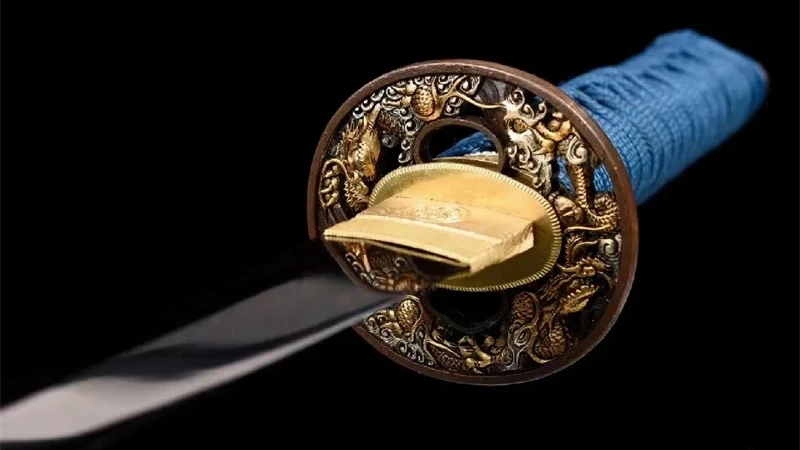
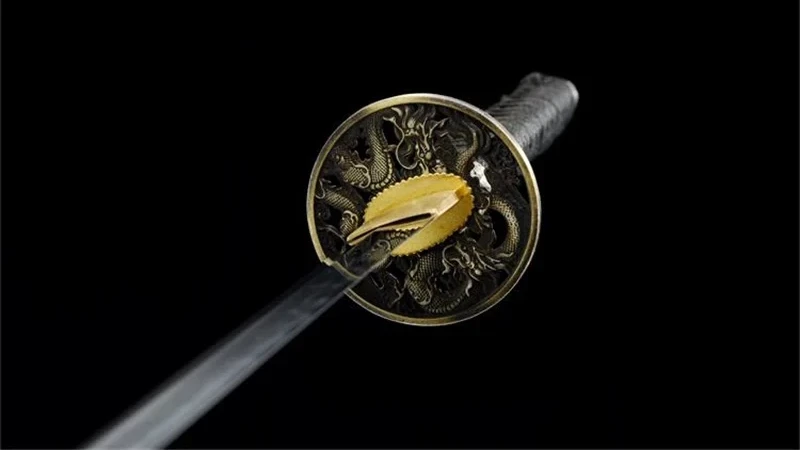
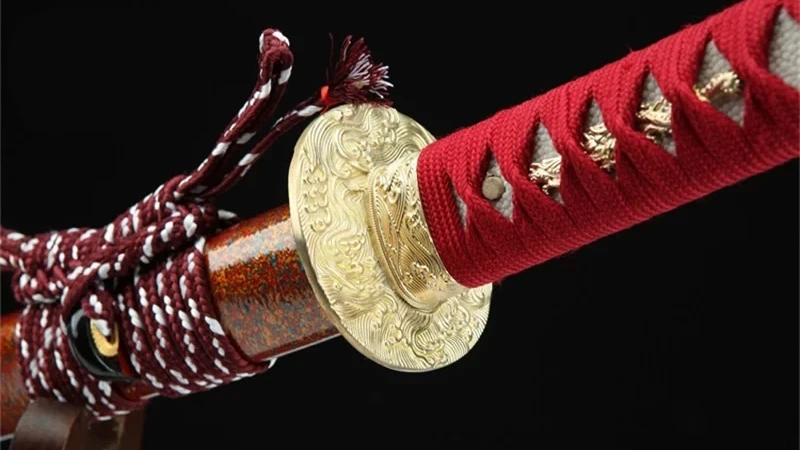
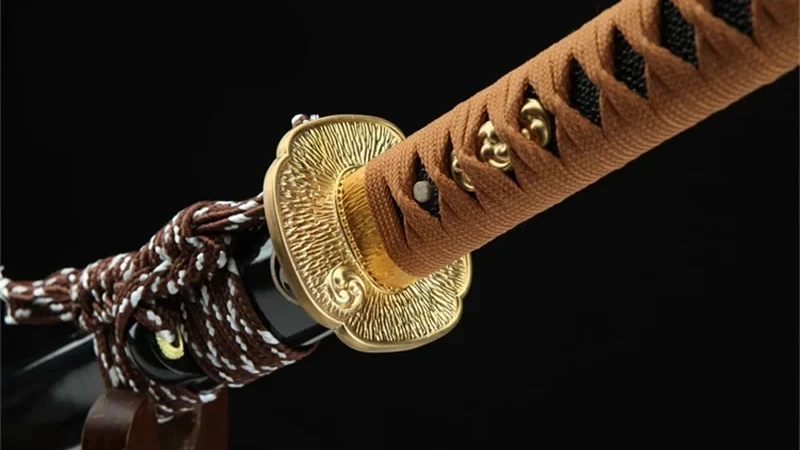
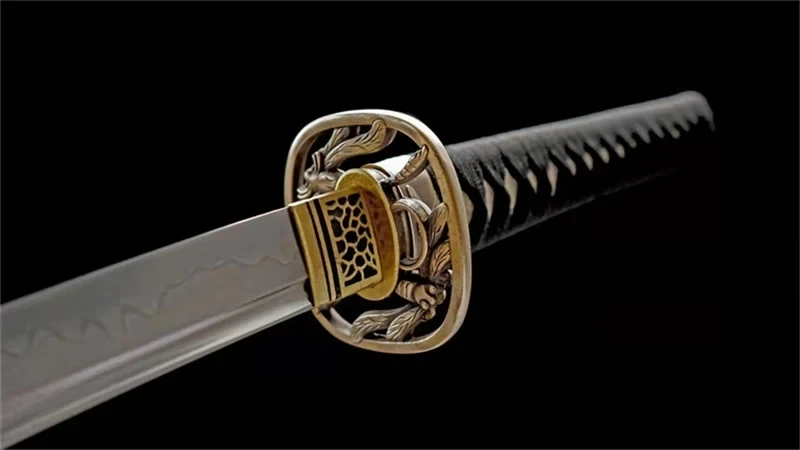
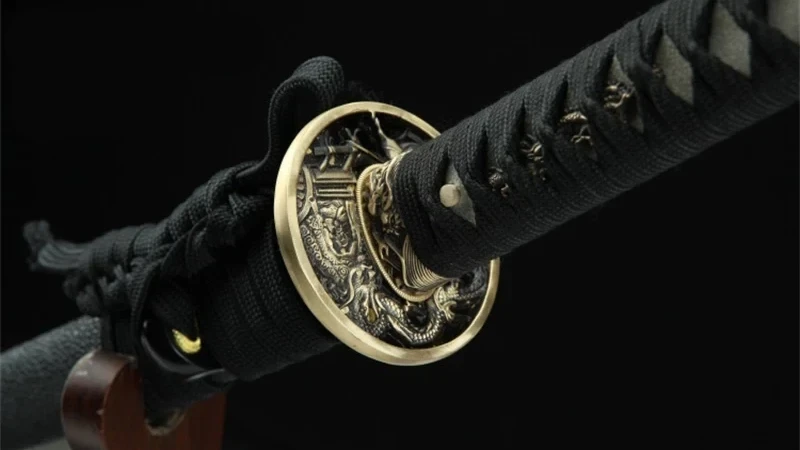
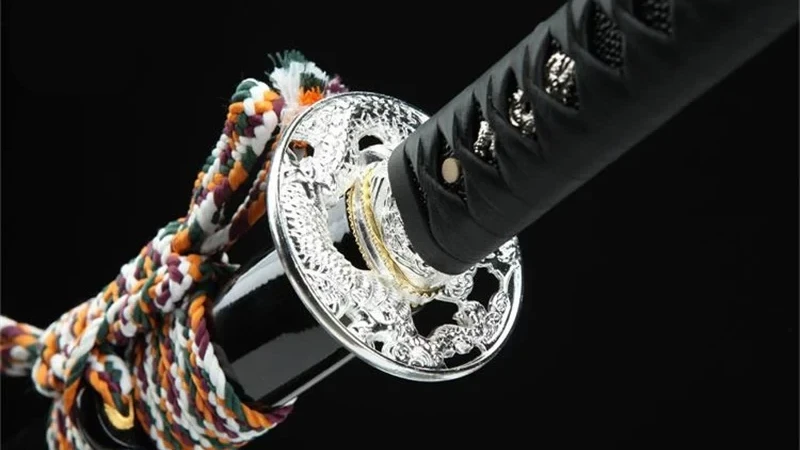
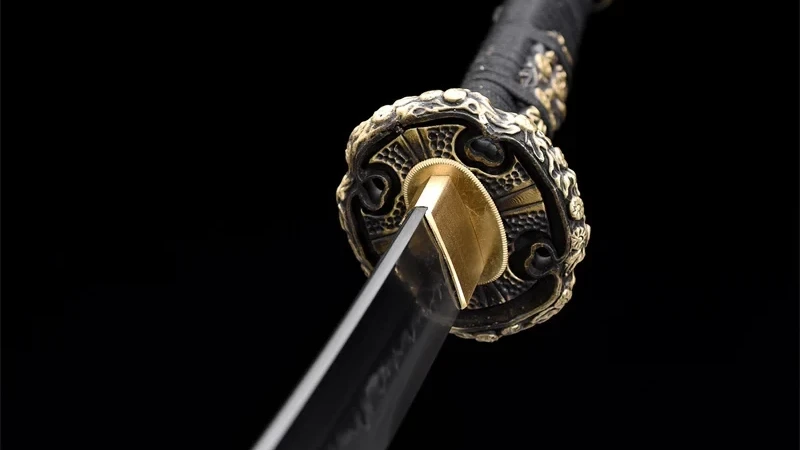
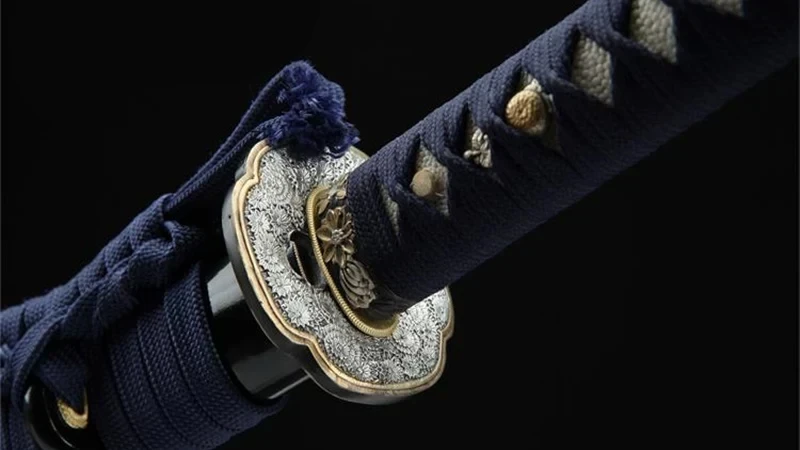
Since the Edo period, Tsubas have functioned as genuine works of art, their surfaces engraved with motifs drawn from Japanese mythology, nature, and religion. These designs were not purely decorative, each carried specific symbolic meaning deeply rooted in Japanese cultural and spiritual traditions.
Common Motifs and Their Meanings
- Cherry blossom (Sakura): Ephemerality of life, a central concept in samurai philosophy.
- Dragon: Strength, power, and divine protection.
- Sacred mountains and clouds: Connection to the divine and the natural world.
- Chrysanthemum: Imperial authority and longevity.
- Lion Dog (Shishi): Protection and warding off evil.
- Plum blossom: Resilience and perseverance.
The choice of motifs was frequently influenced by Shinto religion and Zen Buddhism, lending the Tsuba a spiritual dimension beyond its physical function.
Decorative Techniques
Tsubako employed a range of sophisticated techniques to achieve their decorative effects:
- Sukashi: Openwork cutting through the metal to create negative-space designs.
- Nunome-zōgan: A damascene technique in which thin layers of gold or silver are pressed into a cross-hatched metal surface.
- Patination: Chemical treatments applied to enhance color contrasts and surface texture.
- Precious metal inlay: Gold and silver elements embedded directly into the base metal.
The decorative choices often reflected the social context of the sword’s owner. Warriors in the field carried Tsubas with simpler, more functional designs, while nobles, high-ranking samurai, and Edo-period collectors commissioned highly ornate pieces. Fittings such as the Fuchi (collar beneath the guard) and the Kashira (pommel cap) were frequently decorated in harmony with the Tsuba to create a unified aesthetic.
The Major Schools of Tsuba Making
Over the centuries, distinct regional and stylistic schools emerged, each contributing its own innovations in technique, material, and aesthetic philosophy. These schools are key references for collectors and historians seeking to authenticate and date antique Tsubas.
15th Century : Muromachi Period
| School | Notable Characteristics |
|---|---|
| Gotô | Founded by Gotô Yujô (1453–1512); known for raised-dot ornamentation |
16th Century : Early Edo Period
| School | Notable Characteristics |
|---|---|
| Asakusa | Active in the early Edo period |
| Chôshû | Specialized in sturdy iron Tsubas |
| Ônin | Known for applied relief decoration |
| Tachikanagoshi | Used soft metals with complex inlays |
| Tôcho | Finely cut iron Tsubas, often for ceremonial swords |
| Gomoku-zôgan | Renowned for distinctive ornamentation |
| Kaneie (Fushimi) | Highly detailed works |
| Shingen | Innovative and experimental designs |
| Shôami | Wide variety of styles and techniques |
17th Century : Mid Edo Period
| School | Notable Characteristics |
|---|---|
| Heian-jô | Richly detailed Tsubas; one of the most influential schools |
| Hôan, Kaga, Sukashi | Finely cut iron Tsubas |
| Higo | Founded by Hayashi Matashichi; elegant, refined style |
| Myochin | Robust wrought-iron Tsubas |
18th Century : Late Edo Period
| School | Notable Characteristics |
|---|---|
| Kinaï | Specialized in iron cutting; prized for finesse |
| Ko-Kinko | Soft metal works with elaborate decoration |
19th Century : End of Edo Period
| School | Notable Characteristics |
|---|---|
| Ôtuki (Tokyo) | Active in the final decades of the Edo period |
| Tanaka | Continuation of Edo traditions |
The signatures and stylistic hallmarks of individual tsubako allow specialists to trace the provenance of specific pieces, making authenticated antique Tsubas among the most prized objects in Japanese decorative arts.
To Keep
The Tsuba is far more than a functional sword component. Its evolution, from a rudimentary iron disc forged for battlefield survival to an elaborately decorated object of cultural and artistic prestige, mirrors the broader arc of Japanese history. To own an antique Tsuba is to hold a tangible fragment of that history: a testament to the refinement of Japanese craftsmanship, the spiritual depth of samurai culture, and the enduring legacy of the tsubako tradition.
For a complete breakdown of all components, including the Tsuba and other fittings, see our Parts of a Katana guide.