
Jump to: What is a Bo-Hi | Terminology | The Engineering | The Blood Groove Myth | Tachikaze: The Sound | Types of Hi | Bo-Hi and Blade Geometry | Hand-Carved vs Machine-Cut | Bo-Hi vs No-Hi | Symbolism and Tradition | Evaluating Quality | FAQ
What is a Bo-Hi?
The bo-hi (棒樋) is the longitudinal groove carved into one or both faces of a Japanese sword blade, running along the shinogi-ji (the flat area between the spine and the ridge line) from near the base of the blade toward the tip. It is the feature most commonly described in Western contexts as the “blood groove” a name that is both widespread and entirely incorrect. The bo-hi has nothing to do with blood.
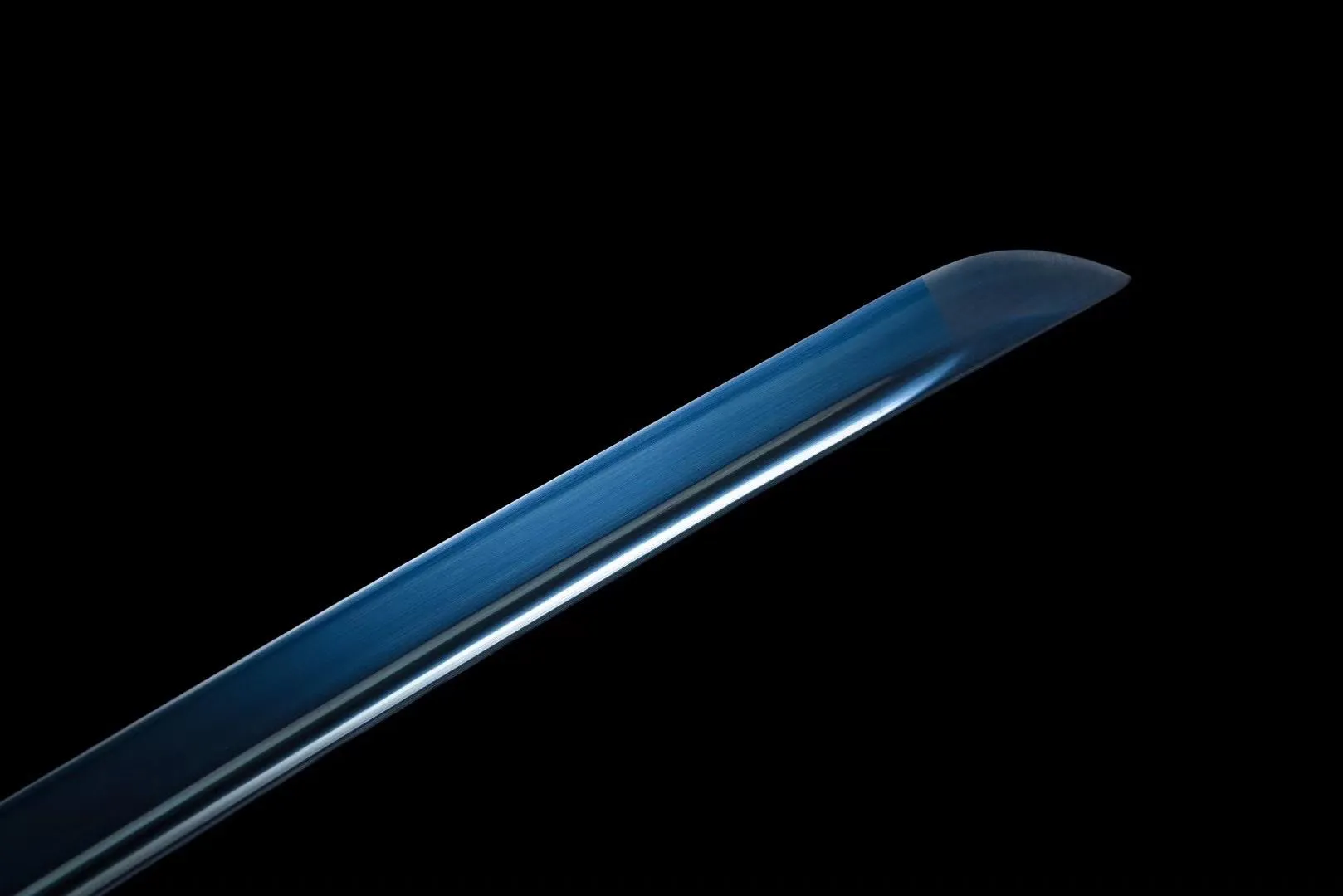
In Japanese, hi (樋) simply means groove or channel. Bo (棒) means rod or stick, describing the straight, elongated geometry of this particular groove type. Bo-hi is therefore the “rod groove” or “stick groove” a purely geometric description with no battlefield connotations. The term hi is the general word for any groove on a blade; bo-hi is one specific type among several, distinguished by its single full-length form. Because “bo-hi” became the dominant term in the English-speaking sword community, it is now widely used to refer to blade grooves generally, though this is technically imprecise.
Not every katana has a bo-hi. It is a deliberate design choice, not a standard feature, and the decision to include or omit it has measurable consequences for the sword’s weight, balance, handling speed, acoustic characteristics, and visual appearance. Understanding what a bo-hi actually does and does not do is fundamental to understanding the katana as an engineered object.
All three refer to the same feature. Hi is the Japanese term for groove in general. Bo-hi (with hyphen) and bohi (without) are both accepted transliterations of 棒樋 in the English-speaking sword community. This guide uses bo-hi throughout for consistency, but you will encounter all three spellings in books, forums, and catalogues. The meaning is the same.
Terminology: Hi vs Bo-Hi vs Fuller
Before going further, it is worth clarifying how Japanese terminology maps onto Western sword vocabulary, since the two systems do not align perfectly.
In Western sword studies, a fuller is the general term for any longitudinal groove in a blade, regardless of its width, depth, position, or length. The word comes from the blacksmith’s fuller tool used to displace metal during forging, though not all fullers are made this way. European longswords, Viking swords, and military sabres all feature fullers, and the term is used consistently across these traditions.
In Japanese, hi is the equivalent general term it describes any groove on a blade. Bo-hi is one specific sub-type: a single, wide, full-length groove. Several other named hi types exist with distinct geometries, described in the Types of Hi section below. When Western sources say “the bo-hi” or “the fuller,” they are usually referring to the same feature: the single prominent groove visible on the majority of grooved katana. The distinction matters when discussing the less common hi variants, which have their own names and their own visual and functional characteristics.
The Engineering: What a Bo-Hi Actually Does
The bo-hi serves three genuine, measurable engineering purposes: it reduces weight, it modifies the balance point, and it generates acoustic feedback during cutting. A fourth claimed purpose drainage of blood is a myth addressed separately below.
Weight reduction
The primary function of the bo-hi is to remove steel from the blade without proportionally reducing its strength. A correctly executed bo-hi on a full-length katana removes approximately 60 to 90 grams of steel, representing a weight reduction of roughly 10 to 15 percent of the blade’s total weight. Some sources cite figures up to 20 to 35 percent, though these higher numbers typically apply to blades where the bo-hi is combined with other weight-reducing features such as a thinner cross-section overall.
The reason the bo-hi can remove this material without catastrophically weakening the blade lies in its position. The groove is carved in the shinogi-ji, which sits along the neutral axis of the blade during its primary loading condition: bending stress from a cut. In structural engineering terms, the bo-hi creates an effect analogous to an I-beam: material is removed from the centre of the cross-section (where bending stresses are lowest) while the edge and spine where stresses concentrate during cutting and impact remain at full thickness.
This structural efficiency is directly linked to the way the blade is forged. The internal grain structure of the steel, developed during the differential heating, folding, and shaping process, determines how stress is distributed throughout the blade. Understanding how a katana is forged helps clarify why material can be removed in specific zones without compromising overall integrity, as the forging process optimizes both resilience and flexibility at a microscopic level.
A properly executed bo-hi reduces mass by approximately 10 to 15 percent while reducing bending strength by less than 5 percent. The strength-to-weight ratio of the blade actually improves.
Balance shift
By removing weight from the mid-section of the blade rather than from the tip or base, the bo-hi shifts the sword’s balance point toward the tsuba typically by 10 to 25mm depending on the groove’s dimensions and the blade’s overall geometry. This forward-of-tsuba balance shift produces a blade that feels lighter in the hand during dynamic movement, accelerates more quickly into a cut, and is more responsive to small wrist adjustments. The Japanese term for this quality is te no uchi the feeling of the sword in the hand.
The tradeoff is equally real: a blade balanced closer to the hilt delivers less momentum through the tip on impact than a blade with a more forward balance point. For cutting heavy targets that require mass behind the cut, a no-hi blade with its more forward balance can be advantageous. This is why the choice between bo-hi and no-hi is not a question of which is objectively better, but of what kind of cutting the sword will primarily be used for.
Rotational inertia reduction
Beyond simple mass reduction, the bo-hi reduces the blade’s moment of inertia its resistance to rotational acceleration. Because the removed mass is distributed along the length of the blade rather than concentrated at one point, the effect on rotational dynamics is disproportionately large relative to the raw weight reduction. A blade that is 12 percent lighter due to a bo-hi may have its moment of inertia reduced by 18 to 22 percent. The practical result is a blade that starts and stops more quickly during cuts, enabling faster transitions between techniques.
| Property | Bo-Hi blade | No-Hi blade |
|---|---|---|
| Weight | 10 to 15% lighter (typical) | Full weight |
| Balance point | Shifted 10 to 25mm toward tsuba | More forward; toward tip |
| Draw speed / agility | Faster; lower rotational inertia | Slower; heavier through arc |
| Cutting momentum | Slightly less mass behind cut | More mass; better for hard targets |
| Bending strength | Less than 5% reduction | Full structural integrity |
| Torsional strength | Marginally reduced | Full torsional integrity |
| Tachikaze | Present; audible during correct cuts | Absent or minimal |
The Blood Groove Myth: Setting the Record Straight
The “blood groove” explanation is the single most persistent myth in Western katana discourse, and it deserves a thorough refutation not because it is an obscure misconception, but because it is stated as fact in a remarkable number of otherwise credible sources.
The claim, in its various forms, is that the bo-hi was designed to channel blood away from the blade during combat to prevent the handle from becoming slippery, or alternatively to prevent suction when withdrawing the blade from a body after a thrusting technique. Both versions are false.
The suction argument fails on basic physics. The resistance encountered when withdrawing a blade from a wound is caused primarily by tissue elasticity and muscular contraction not by negative pressure. The wound closes around the blade as it enters, and the same tissue elasticity assists the withdrawal. No groove of 1 to 3mm depth running along the spine-side of the blade could create or relieve meaningful suction in this context. The groove is not positioned where it would need to be to perform this function, and the physics of wound dynamics do not support the premise.
The blood drainage argument is equally unsupported. The bo-hi runs along the shinogi-ji the upper flat of the blade near the spine not along the cutting edge where blood contact would occur. Blood moving down a cutting edge would flow away from the bo-hi, not into it. The groove is on the wrong part of the blade for the claimed function.
Most conclusively: Japanese historical sources, sword manuals, and technical records make no mention of any blood-related function for the hi. The terms hi and bo-hi refer to groove geometry in every historical context in which they appear. The “blood groove” name is a Western invention, likely originating with European soldiers and collectors who encountered Japanese swords in the Meiji era and applied a folk explanation they already associated with European sword fullers which are themselves not blood-drainage features either.
The “blood groove” explanation has survived because it is vivid, memorable, and superficially plausible to someone who has not examined the physics closely. It also fits a particular romantic idea of the katana as a ruthlessly practical weapon engineered to the last detail for killing. The actual explanation structural engineering and rotational dynamics is less dramatic but more accurate, and reflects the real sophistication of Japanese sword design far better than the myth does.
Tachikaze: The Sound of the Bo-Hi
One genuine function of the bo-hi that is neither myth nor engineering abstraction is its acoustic effect. When a sword with a bo-hi is swung correctly through the air, the groove creates turbulence that produces an audible sound: a whistle, hiss, or rushing noise that Japanese swordsmanship calls tachikaze (太刀風, literally “sword wind”).
This sound is not purely decorative or theatrical. In practice, tachikaze serves as real-time feedback on cutting technique. A cut executed with correct speed, angle, and arc produces a clear, sustained tachikaze; a cut with incorrect mechanics produces a different sound or no sound at all. For practitioners of iaido and kenjutsu, the sound of the bo-hi during practice allows the instructor and the student to assess technique without watching every cut in detail. It is an acoustic training tool built into the blade.
The character of the tachikaze varies with the bo-hi’s dimensions. A wider, deeper groove produces a lower-pitched, more resonant sound. A narrower groove produces a higher, sharper whistle. A double groove (futasuji-hi) produces a more complex acoustic signature than a single bo-hi. Experienced practitioners can identify the groove type of a blade by its sound during cutting, and some smiths deliberately tuned the bo-hi dimensions to produce a specific tachikaze character requested by the commissioner.
On a blade without a bo-hi a no-hi blade the tachikaze is absent or greatly reduced. This is one practical reason why practitioners who use their swords primarily for iaido and tameshigiri often prefer a bo-hi blade: the acoustic feedback is a genuine training advantage. Practitioners who cut hard targets primarily may prefer the slightly greater mass and torsional rigidity of a no-hi blade and are willing to trade the tachikaze for it.
Types of Hi
The bo-hi is the most common and most discussed groove type, but it is one of several named hi found on Japanese swords. Each has a distinct geometry and distinct visual and functional characteristics. The following are the types most commonly encountered on katana and related blades.
Bo-Hi 棒樋
The standard single full-length groove. Runs along the shinogi-ji from near the hamachi (the notch at the base of the cutting edge) toward the kissaki, terminating either just before the yokote (the line separating the blade body from the tip) or extending through the kissaki depending on the variant. Width typically 6 to 10mm; depth 1 to 3mm. The most common hi on katana, wakizashi, and tantō with grooves. The standard reference point against which all other hi types are described.
Futasuji-Hi 二筋樋
A double groove: two parallel channels running side by side along the shinogi-ji. Sometimes called the double bo-hi in English. Each individual channel is shallower than a single bo-hi, so the total depth of material removed is similar to a standard bo-hi rather than double. The practical handling effect weight reduction, balance shift, tachikaze is comparable to a single bo-hi of equivalent total cross-section. The visual effect is more complex and refined, and the tachikaze produced by two channels has a slightly different acoustic character. Futasuji-hi is associated with swords of certain regional traditions and periods and is considered more elaborate than the standard single groove.
Soebi 添樋
A secondary narrow groove running parallel to and alongside a primary bo-hi. The soebi is significantly thinner than the main groove typically 2 to 4mm wide. It does not meaningfully alter the blade’s weight or balance; its function is primarily visual, adding refinement and complexity to the groove area. Soebi is found on formal and high-quality production blades where the additional visual detail is appropriate to the koshirae style.
Tsurebi 連樋
Similar to soebi but the secondary groove runs the full length of the primary bo-hi and terminates at the same point. The name references the idea of the two grooves travelling together. Like soebi, the tsurebi is primarily a visual refinement rather than a structural modification, though on very long blades it may contribute marginally to weight reduction.
Kuichigai-Hi 食い違い樋
Two thin, offset grooves on the upper portion of the blade that do not run parallel they are staggered or offset from each other, creating a visually distinctive pattern. Kuichigai-hi is found primarily on tantō and short blades where the shorter canvas requires a more compact decorative approach. Relatively rare on full katana.
Naginata-Hi 薙刀樋
A groove style associated with the naginata (the curved polearm) that appears on some tantō and occasionally on katana. Wider and shallower than the standard bo-hi, producing a different visual proportion and a different tachikaze character. The name refers to the naginata origin of the style rather than indicating the blade is a naginata.
Kakinagashi-Hi 掻き流し樋
A groove that extends partway into the nakago (tang), below the habaki. Standard bo-hi terminates at or just above the habaki; kakinagashi-hi runs below it. A further variant, kakitoshi-hi, extends all the way to the end of the tang. These groove extensions were used historically in certain regional traditions and add a distinctive signature to the blade when the habaki is removed for cleaning or inspection.
| Hi Type | Channels | Function | Frequency |
|---|---|---|---|
| Bo-hi | 1 wide groove | Weight, balance, tachikaze | Very common |
| Futasuji-hi | 2 parallel grooves | As bo-hi; distinctive sound and appearance | Moderate |
| Soebi | 1 wide + 1 narrow | Visual refinement; minimal structural effect | Moderate |
| Tsurebi | 2 full-length channels | Visual; parallel companion to main groove | Less common |
| Kuichigai-hi | 2 offset thin grooves | Visual pattern; mainly on tantō | Rare |
| Kakinagashi-hi | 1 groove extending into tang | Regional tradition marker | Rare |
Bo-Hi and Blade Geometry
The presence and form of a bo-hi is closely related to the overall cross-sectional geometry of the blade. Not all blade shapes are equally suited to a bo-hi, and understanding this relationship explains why certain blade types have grooves and others do not.
Shinogi-zukuri
The shinogi-zukuri is the standard cross-section of most katana: a ridged blade with a raised centre line (the shinogi) separating the flat of the upper blade (shinogi-ji) from the cutting bevel (ha-nuki). The shinogi-ji provides exactly the flat surface area on which a bo-hi can be cleanly executed. The standard bo-hi on a shinogi-zukuri blade runs from near the hamachi to either just before or through the yokote at the kissaki, depending on the variant. This is the configuration most people picture when they think of a grooved katana.
Hira-zukuri
The hira-zukuri is a flat-ground blade with no shinogi ridge the blade tapers in a single flat plane from spine to edge. Common on tantō. Because there is no raised shinogi-ji to carry a groove, bo-hi on hira-zukuri blades takes a different form: shorter, positioned differently, or absent. Hi on hira-zukuri tantō tends to be narrower and closer to the spine (mune) than on shinogi-zukuri blades.
Unokubi-zukuri
The unokubi-zukuri (cormorant’s neck shape) is a blade that transitions from a hira-zukuri cross-section at the base to a shinogi-zukuri cross-section in the upper portion, creating a distinctive narrowing near the base. This shape was often combined with a bo-hi on the shinogi-zukuri portion to produce a very light, fast blade for specific combat requirements. The combination is visually distinctive and strongly associated with certain schools and periods.
Kissaki treatment
The way the bo-hi terminates at the kissaki is one of the clearest indicators of whether a groove was hand-carved or machine-cut. On a hand-carved bo-hi, the groove terminates before the yokote in a carefully shaped taper that follows the contours of the kissaki geometry. This requires the swordsmith or polisher to work the termination by hand to match the specific curve of that blade’s tip. On a machine-cut bo-hi, the termination is rounded mechanically and does not follow the kissaki contours the difference is immediately visible to an experienced eye.
Hand-Carved vs Machine-Cut Bo-Hi
The method by which a bo-hi is produced has significant implications for quality, authenticity, and value. Traditional hand-carved bo-hi and modern machine-cut bo-hi are visually and technically distinguishable.
Traditional hand carving
A traditional bo-hi is produced using a sen (a specialised scraper tool) and various chisels after the blade has been forged and rough-ground. The smith works the groove by hand along the shinogi-ji, controlling the width, depth, and profile throughout the length of the blade. The termination points at the habaki end and the kissaki end are shaped individually to follow the specific contours of that blade. After the groove is cut, the polisher (togishi) refines and polishes the interior of the groove as part of the full polishing process, producing a smooth, mirror-finished interior that integrates visually with the overall polished surface.
The result of traditional hand carving is a bo-hi with crisp, clean edges along its full length, tapered terminations that follow the blade’s specific geometry, and a polished interior that catches light cleanly. The groove profile is typically slightly curved rather than flat-bottomed in cross-section, following the natural path of the sen tool.
Machine production
On production swords, the bo-hi is cut by machine either milled before heat treatment or ground after it. Machine cutting produces a groove with rounded, standardised termination points that do not follow the specific kissaki geometry of the individual blade. The interior surface may not be polished to the same standard as a hand-carved groove, and the edges of the groove may show machine tooling marks rather than the clean lines of hand work.
For a functional cutting sword at a moderate price point, a machine-cut bo-hi is entirely acceptable in terms of performance. The weight reduction, balance shift, and tachikaze effects are present regardless of how the groove was produced. The difference matters principally for collectors and for practitioners who value the visual and tactile quality of their equipment as well as excellent steel quality.
Examine the termination points. On a hand-carved bo-hi, the groove tapers to a clean, shaped end that follows the contours of the kissaki and the habaki area the termination looks intentional and specific to that blade. On a machine-cut bo-hi, the termination is a uniform rounded end that does not follow the blade’s individual geometry. Also inspect the interior of the groove under angled light: a fully polished hand-carved groove reflects light evenly; a machine-cut groove may show a different surface texture or residual tooling marks.
Bo-Hi vs No-Hi: Which is Better?
The question of whether to choose a bo-hi or no-hi blade is one of the most common questions in katana selection and one of the most poorly answered. The honest answer is that neither is universally better. They are different tools suited to different preferences and uses.
Arguments for bo-hi
A bo-hi blade is lighter, faster in the hand, and more responsive to small wrist movements. The reduced moment of inertia makes it easier to change direction mid-cut and to execute rapid successive techniques. The tachikaze provides real-time acoustic feedback on cutting technique that a no-hi blade cannot offer. For iaido practitioners, the lighter, more responsive feel and the acoustic feedback are genuine advantages. For someone who values the visual and traditional character of the standard shinogi-zukuri katana, the bo-hi is the expected feature.
Arguments for no-hi
A no-hi blade carries more mass through the cut, delivering greater momentum to hard targets. It has slightly better torsional rigidity, making it marginally more forgiving if a cut strikes an unanticipated hard surface at an incorrect angle. For tameshigiri (test cutting) on hard targets like bamboo or thick tatami, a no-hi blade is often preferred by experienced practitioners. A no-hi blade is also somewhat simpler to maintain: the groove of a bo-hi accumulates dust and oil residue and requires specific cleaning tools to reach the interior properly.
The practical reality
For the majority of practitioners and collectors, the choice between bo-hi and no-hi is as much about personal preference and aesthetic character as it is about performance. Both configurations are historically attested, both are appropriate for a well-made katana, and both perform well across the range of uses for which a sword is typically purchased. The decision should be made with clear knowledge of what each configuration does rather than based on which sounds more impressive.
Symbolism, Tradition, and the Bo-Hi
Beyond its engineering role, the bo-hi carries historical and symbolic dimensions that the purely technical discussion misses.
In certain Buddhist traditions, the groove of the hi was associated with the hiss of a dragon ryu no koe, the dragon’s voice and the tachikaze sound was interpreted as the blade calling out with spiritual force. Some ceremonial swords had the hi area engraved with bonji (Sanskrit Buddhist script) or with religious imagery such as gomabashi (flame symbols) or the kurikara (the dragon wrapped around a sword, a symbol of Fudo Myo-o). These engravings transformed the practical groove into a spiritual element, imbuing the sword with protective or talismanic meaning for its bearer.
The presence or absence of a bo-hi was also sometimes used as a signature element by individual smiths or schools. Certain lineages preferred no-hi blades as a matter of aesthetic philosophy; others incorporated specific groove geometries as part of their recognisable style. When appraising a blade for attribution, the hi configuration is one of the features examined alongside the hamon, hada, and blade shape.
In the Edo period, the bo-hi on formal presentation swords was sometimes lacquered in red a practice more common on yari (spears) but also seen on select katana. This treatment protected the interior of the groove from rust and added a vivid visual accent, particularly on blades with elaborate koshirae where the red lacquer coordinated with other decorative elements.
Evaluating Bo-Hi Quality
When examining a sword with a bo-hi, the following checks allow a reliable assessment of the groove’s quality and the care with which it was executed.
Edge consistency
Run a fingernail carefully along the edge of the bo-hi from habaki to kissaki. The edge should be clean and consistent throughout, without chipping, undulation, or visible tooling marks. Any roughness along the edge indicates either poor initial execution or inadequate polishing of the groove.
Termination points
Examine both ends of the groove. The habaki end should taper cleanly to a stop that fits neatly under or just above the habaki collar. The kissaki end should either taper cleanly before the yokote or pass through it cleanly depending on the style. Rounded, uniform mechanical terminations indicate machine production; tapered, geometry-following terminations indicate hand work.
Interior polish
Under angled light, the interior of a quality bo-hi should reflect light evenly and cleanly, with the same surface quality as the polished flat of the blade. A dull, scratched, or inconsistently finished interior indicates incomplete polishing of the groove.
Symmetry between faces
On a blade with bo-hi on both faces, examine the groove from the tip: the two grooves should be at the same height on each face and should be visually symmetrical. Asymmetric placement indicates careless layout during production.
Width and depth consistency
The groove should be consistent in width and apparent depth throughout its length. Variations in width along the groove indicate uneven execution; a groove that appears noticeably deeper or shallower at different points suggests inconsistent tool pressure during carving.
Frequently Asked Questions
Does every katana have a bo-hi ?
No. The bo-hi is a design choice, not a required feature of the katana. Many historically significant blades, including masterworks from all five major traditions, were made without any groove. Both bo-hi and no-hi configurations are historically attested and both are appropriate for a correctly made katana. The decision to include a groove affects weight, balance, and acoustic characteristics and should be made with those consequences in mind.
Does a bo-hi weaken the blade ?
A correctly executed bo-hi reduces bending strength by less than 5 percent while reducing weight by 10 to 15 percent. The bending strength reduction is not practically significant under normal cutting conditions. There is a marginal reduction in torsional strength, which can matter if the blade strikes a hard target at a badly incorrect angle. An improperly executed bo-hi one that is too deep, too wide, or incorrectly positioned can significantly weaken the blade, which is why groove quality matters. A well-made bo-hi does not weaken the sword in any practically significant way.
Why is it called a blood groove ?
The “blood groove” name is a Western folk explanation, not a Japanese term or a historically documented function. It likely originated with European soldiers and collectors who encountered Japanese swords in the Meiji era and applied a story already associated with European sword fullers. Neither the Japanese terminology nor any historical Japanese sword manual supports a blood-related function. The name persists because it is vivid and memorable, not because it is accurate.
What is tachikaze and how does the bo-hi produce it ?
Tachikaze (太刀風, “sword wind”) is the sound produced when a blade with a bo-hi is swung correctly through the air. The groove creates turbulence in the airflow along the blade, generating an audible whistle or rushing sound. The character of the sound depends on the groove’s dimensions: wider and deeper grooves produce a lower, more resonant sound; narrower grooves produce a sharper whistle. Tachikaze serves as acoustic feedback on cutting technique in iaido and kenjutsu practice.
How do I clean inside a bo-hi ?
The interior of a bo-hi accumulates dust, old oil, and metal particles and requires regular cleaning. Use a thin strip of clean cloth or a purpose-made groove cleaning stick (available from sword supply specialists) lightly dampened with choji oil. Draw it through the groove from habaki to kissaki with consistent light pressure. Follow with a dry pass to remove excess oil. Do not use cotton swabs, which leave fibres in the groove, or abrasive materials that can scratch the polished interior surface.
Is a bo-hi better for iaido practice ?
Many iaido practitioners prefer a bo-hi blade for two reasons: the lighter weight and shifted balance point make the sword more responsive during the rapid draw-and-cut techniques central to iaido practice, and the tachikaze provides acoustic feedback that helps assess cutting technique. However, neither is obligatory. The correct blade for iaido practice is one that fits the practitioner’s body proportions and the specifications of their school, with or without a bo-hi. Consult your sensei before making decisions about blade configuration for practice.
For a complete breakdown of all blade features, see our Parts of a Katana guide. To understand the temper line that runs along the cutting edge, read our complete guide to the Hamon.