Showing all 24 resultsSorted by popularity
-
 £220.00Select options This product has multiple variants. The options may be chosen on the product page
 -
£220.00Select options This product has multiple variants. The options may be chosen on the product page
-
£270.00Select options This product has multiple variants. The options may be chosen on the product page
-
£250.00Select options This product has multiple variants. The options may be chosen on the product page
-
£240.00Select options This product has multiple variants. The options may be chosen on the product page
-
£260.00Select options This product has multiple variants. The options may be chosen on the product page
-
£250.00Select options This product has multiple variants. The options may be chosen on the product page
-
£345.00Select options This product has multiple variants. The options may be chosen on the product page
-
£360.00Select options This product has multiple variants. The options may be chosen on the product page
-
£430.00Select options This product has multiple variants. The options may be chosen on the product page
-
£360.00Select options This product has multiple variants. The options may be chosen on the product page
-
£290.00Select options This product has multiple variants. The options may be chosen on the product page
-
£220.00Select options This product has multiple variants. The options may be chosen on the product page
-
£220.00Select options This product has multiple variants. The options may be chosen on the product page
-
£240.00Select options This product has multiple variants. The options may be chosen on the product page
-
£220.00Select options This product has multiple variants. The options may be chosen on the product page
-
£270.00Select options This product has multiple variants. The options may be chosen on the product page
-
£300.00Select options This product has multiple variants. The options may be chosen on the product page
-
£415.00Select options This product has multiple variants. The options may be chosen on the product page
-
£360.00Select options This product has multiple variants. The options may be chosen on the product page
-
£260.00Select options This product has multiple variants. The options may be chosen on the product page
-
£250.00Select options This product has multiple variants. The options may be chosen on the product page
-
£215.00Select options This product has multiple variants. The options may be chosen on the product page
-
£200.00Select options This product has multiple variants. The options may be chosen on the product page
-Serpent-de-Cuivre-04-3-300x180.jpg)

Showing all 24 resultsSorted by popularity
Damascus Katana for Sale, Folded Steel Blades with Unique Grain Patterns
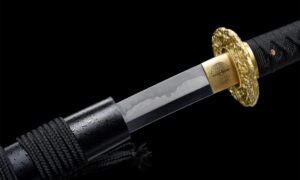
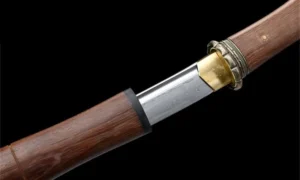
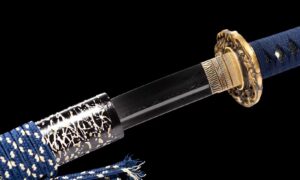
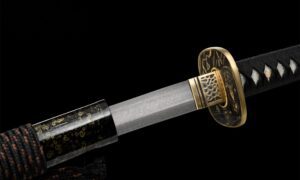
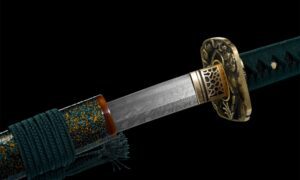
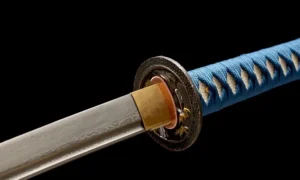
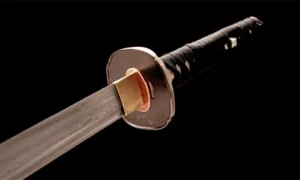
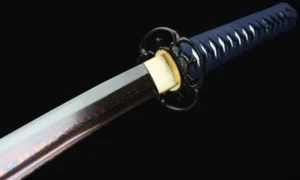
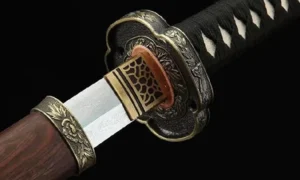
A Damascus katana is unlike any other blade in our collection. Where a standard carbon steel katana earns its beauty through geometry and hamon, a Damascus steel katana wears its craftsmanship on its surface, with flowing, wave-like grain patterns forged directly into the blade through the repeated folding and welding of multiple steel layers. No two blades share the same pattern. Every sword is, in the truest sense, one of a kind.
At Japanese Swords, every Damascus katana sword in our collection is hand-finished, full-tang, and built to perform as impressively as it looks, whether you are a collector drawn to visual distinction, a martial artist who wants a blade that catches light during practice, or simply someone who appreciates exceptional craftsmanship.
What Is Damascus Steel?
Damascus steel, also known as folded steel or pattern-welded steel, is created by layering different types of steel together, heating them, and forge-welding them into a single billet. This billet is then repeatedly folded and hammered, sometimes producing hundreds of individual layers, before being shaped into a blade.
The result is a blade with two defining qualities. First, visual identity: the flowing grain patterns that emerge from the layered structure, revealed by polishing and acid etching, are completely unique to each blade. Second, structural balance: the alternating hard and softer steel layers create a blade that combines good edge retention with resistance to cracking, a combination that single-steel blades cannot replicate in the same way.
In the context of Japanese swords, Damascus katana blades represent the meeting point between the traditional craft of the samurai and the ancient metallurgical art of pattern-welded steel, producing some of the most visually striking and technically interesting blades available today.
Why Choose a Damascus Katana?
A Damascus steel katana stands apart from other blades for three reasons:
- Uniqueness: no two Damascus blades share the same pattern. The folding process creates organic, flowing lines that vary with every sword, giving each piece individual character that no factory-produced blade can match.
- Visual depth: light plays across the layered steel differently depending on the viewing angle, producing a dynamic surface that commands attention whether drawn for practice or displayed on a wall mount.
- Performance: the layered construction distributes carbon evenly throughout the blade and creates a structure that is both strong enough for cutting practice and flexible enough to absorb impact without cracking.
For collectors, a Damascus katana sword is a natural centrepiece. For practitioners, it is a blade that performs in the dojo as well as it looks on the wall. Browse the full collection above to find yours, or explore our full range of Japanese katanas if you are still deciding on your steel.
Caring for a Damascus Katana
Damascus steel responds to maintenance much like other high-carbon blades, with one key difference. The acid-etched surface that reveals the grain patterns creates a slightly more textured surface than a plain polished blade, which means moisture can settle between the pattern lines more readily. A few extra minutes of attention after each handling session keeps your Damascus katana sharp and pristine for years:
- Wipe after every handling: fingerprints contain moisture and salts that can cause spotting between the pattern layers. Use a soft, lint-free cloth.
- Oil regularly: a thin coat of choji oil or mineral oil protects the surface and enhances the visibility of the Damascus pattern.
- Avoid abrasive polishing: aggressive polishing flattens the etched texture and progressively removes pattern definition. Use uchiko powder lightly if needed.
- Store in a dry environment: humidity is the enemy of any carbon steel blade. Store horizontally in the saya, edge upward, away from moisture.
For a full maintenance guide, see our katana care guide.
Frequently Asked Questions
Browse the full Damascus katana collection above and find the blade that speaks to you. Looking for other steel options? Explore our full range of Japanese katanas in 1095, T10, and more, or discover our steel guide to find the right blade for your needs.